


Sculptors and the Nutcracker
- Mar 31, 2017
- 5 min read
Hello everyone, welcome to this week’s blog post! I hope you’re all well, and if you read last week’s post, I think most people will be relieved to know I have finally ended my birthday celebrations this week! Instead, I have had a very art-based week, and I’ve learnt a lot about new forms of art! (I say ‘new,’ they’re not new as such, just new to me!) As you probably know, I stick mostly with the traditional, pencils and paints and occasionally my digital tablet, but for the most part, motionless and 2D art is my forte. However, this week, I have learnt a lot about sculpture and later in the week I have even tried my hand at some basic animation! On Monday, I went to the Yorkshire Sculpture Park with a very good friend of mine from my university days, he lives in Yorkshire and is home from university for the Easter holidays, so we decided to explore. At first, I was a little confused, as I’m not one for abstract art in general. I like to try to appreciate the beauty and skill in any art, don’t get me wrong, however, the first few pieces at the park were these:

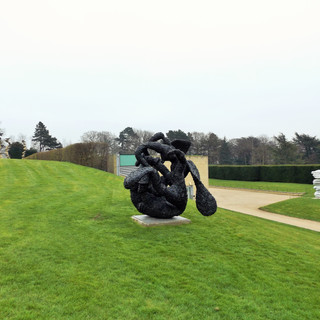
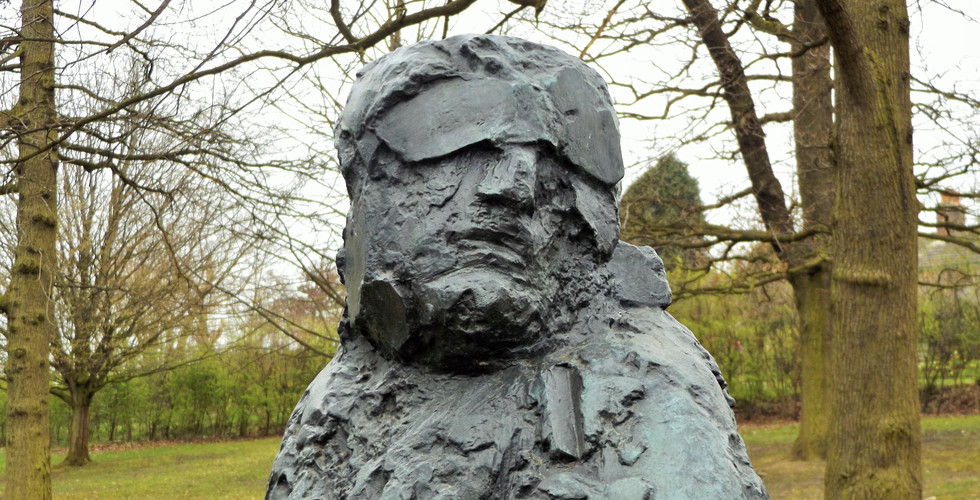
I thought they were very impressive, and certainly a feat of engineering, but artistically speaking I felt there was something missing. How wrong I was though, when later along the path, a sign, seemingly speaking directly to me, explained that this was precisely the point of the installation. The piece is titled ‘Points of View,’ and was created by a sculptor named Tony Cragg. From certain angles, or more relevantly speaking, from certain points of view, the sculptures’ edges hint towards representations of the human face in profile. There are numerous different faces apparent to the viewer, and as you walk around the piece, some faces you saw fade from view and others come to light. It’s a very clever piece and the way the park didn’t display the sign until later on, to almost emphasize the point, was also very interesting. Before visiting the park, I had (perhaps ignorantly) never heard of Tony Cragg, but once I read about him at the park and since I got home, I realise he is truly a very important man. He is one of the world’s most famous sculptors, and he has won a number of awards and prizes for his work, as well as being knighted for his services to visual arts and UK-German relations. There were several of Cragg’s installations in the park, which I photographed and have to here to show you! I would urge anyone who is interested to research Cragg further, and so I’ve collected some links for anyone who might want to read more about him here.
http://www.tony-cragg.com/
http://www.sculpture.org.uk/artwork/point-of-view https://en.wikipedia.org/wiki/Tony_Cragg http://www.ysp.co.uk/exhibitions/tony-cragg-a-rare-category-of-objects


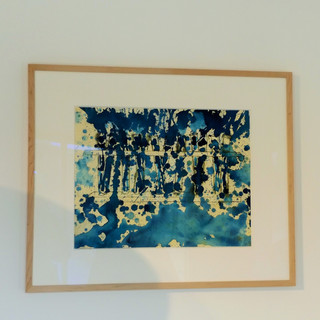






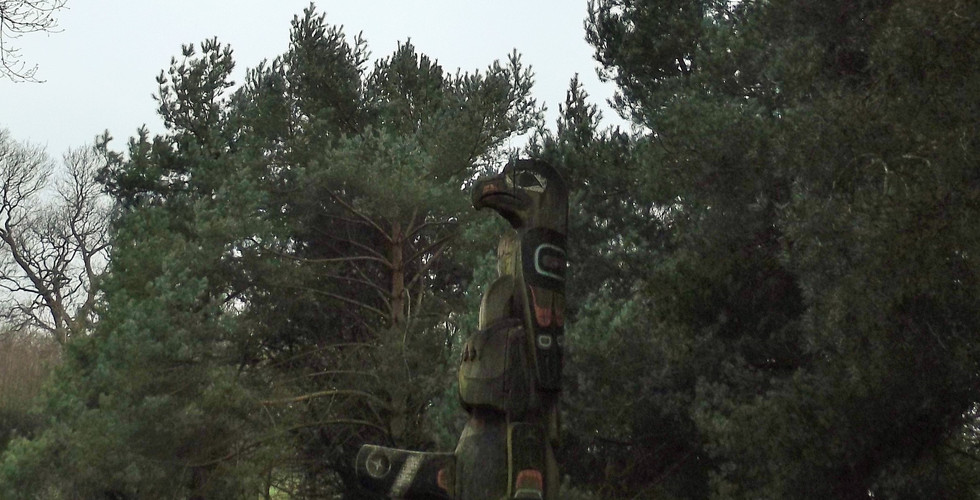
There were several other artists’ works at the Sculpture Park too, and my personal favourite would have to be Marialuisa Tadei, who takes inspiration from the shapes and colours found in nature to create beautiful pieces out of a mosaic of stunningly vibrant tiles. She creates sculptures that explore symbolic and spiritual representation.


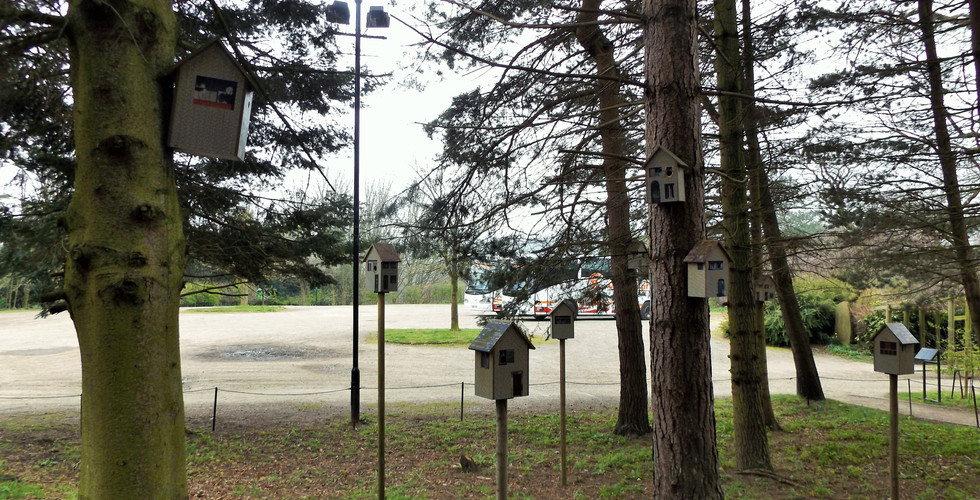
There were a number of absolutely fantastic installations and artworks to behold, and so if you are ever in the area and interested in art, I would most definitely recommend a visit! The best part of all is that it’s absolutely free! Besides the stunning artwork, it is also a picturesque park in it's own right, set across rolling Yorkshire planes and situated around a lake, it’s a lovely place to go for a walk too. We didn’t even have time to explore the entire park, only being able to cover about half the grounds in the time we spent there, and so we will certainly be heading back to see the other side of the lake next time.







So that was my debut into the world of sculpture, and I will certainly be looking to learn more in the future! However, that’s not all I learnt this week, as another friend of mine got me interested in animation. Now, a brief history, first of all, of my initial attempt at animation… For my GCSE year of art, the way it worked was that you were given a title or subject and then you, throughout the year, worked your title or subject until you reached the stage of your final project. The work you did throughout the year could pretty much be whatever you liked, any medium and as long as you could link it back to your title, any topic. At the time, I was mildly obsessed with a particular animator, whose videos and artworks I followed online. Being quite good (I’m sure you can imagine) at being able to waffle my way to the conclusion that this very random topic was related to my title, I managed to work it that as part of my GCSE year project, one of the pieces I could count towards my coursework was a short animation. You have to bear in mind that at this point in time, I was 15 years old, I had only just gotten my digital drawing tablet for Christmas (and didn’t really have the faintest idea how to use it yet) and pretty much no software whatsoever on my computer, for digital art or animation. None of these were important facts though, because I’d convinced my teachers that this was a fantastic idea, no one else in the year was doing anything like this and it’d look really good towards my experimentation, thinking outside the box. So off I went and created a truly terrible, stilted, awkward animation, showing no skill whatsoever. I’m afraid I will certainly not be posting it here! Anyway, that was my first, and last attempt at animation. (I still managed to do well in my Art GCSE though, I did a lot of other work besides my shoddy animation, and quite frankly, I think they took pity on me for it!) Anyway, back to present day, where I regularly use my Bamboo Wacom tablet, and now have the Adobe suite software, including, most importantly in this instance, Photoshop and After Effects. From the friend I mentioned above, I came across a technique called ‘rotoscoping.’ It’s a technique used by animators to create realistic animations, by tracing over each frame of a video one by one and then playing back the illustrations back to back to create a short clip. This was fascinating to me, and based on my previous failure at animation, this seemed like a reasonably safe bet, since I was tracing each frame and not having to come up with anything myself as of yet. I decided to try my hand at ‘rotoscoping’ (I’m not entirely sure if that’s a verb, I’m fairly new to the terminology) a short sequence from the Nutcracker, so I filmed the ballerina and traced over each frame. Here are the frames below, and then how they look as a short animation. This is the first one I’ve done (we’re going to pretend the other one I did for my GCSE didn’t exist, please!) and so don’t judge too harshly!



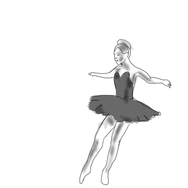



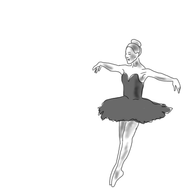











It was great fun though, and I think the next one I do might be a little more on topic, I’m thinking of trying to have a go at a little puffin animation! This is going to be a slow progress though, but I’ll keep you updated. Thanks for reading everyone, and I’ll catch you next week, Rachel x


Comments